拼豆板计算器
迷你豆(2.6 mm)、标准豆(5 mm)和巨型豆(10 mm)的豆数与成品尺寸双向换算,并算出设计要用几块拼豆板、要买多少颗豆。免费,无需注册。
适用于 Perler、Hama、Artkal 以及任何间距相同的拼豆。
Pegboard Calculator
Patterns are sized in beads; a frame or a gift box is sized in centimeters. Enter whichever you have.
One pattern square = one bead = one peg. Pixel art imports at its exact pixel dimensions.
Midi (5 mm) is the default size everywhere — the cheapest beads and the widest color range. Maxi is also sold as Biggie.
The standard square pegboard is 29×29 pegs — about 14.5 cm of midi beads. Boards interlock, so a bigger design just spans several of them. Set your own number if your board differs.
Beads roll off the board, and a misfused section is worth redoing rather than living with.
One bead, one peg
Finished size = beads × bead pitch, because every bead sits on exactly one peg. Midi beads are 5 mm, so two beads per centimeter and 29 of them across a standard board. What bead size and board shape actually change about a project is covered in the bead sizes and pegboards guide, and the fusing itself in how to iron fuse beads.
Results
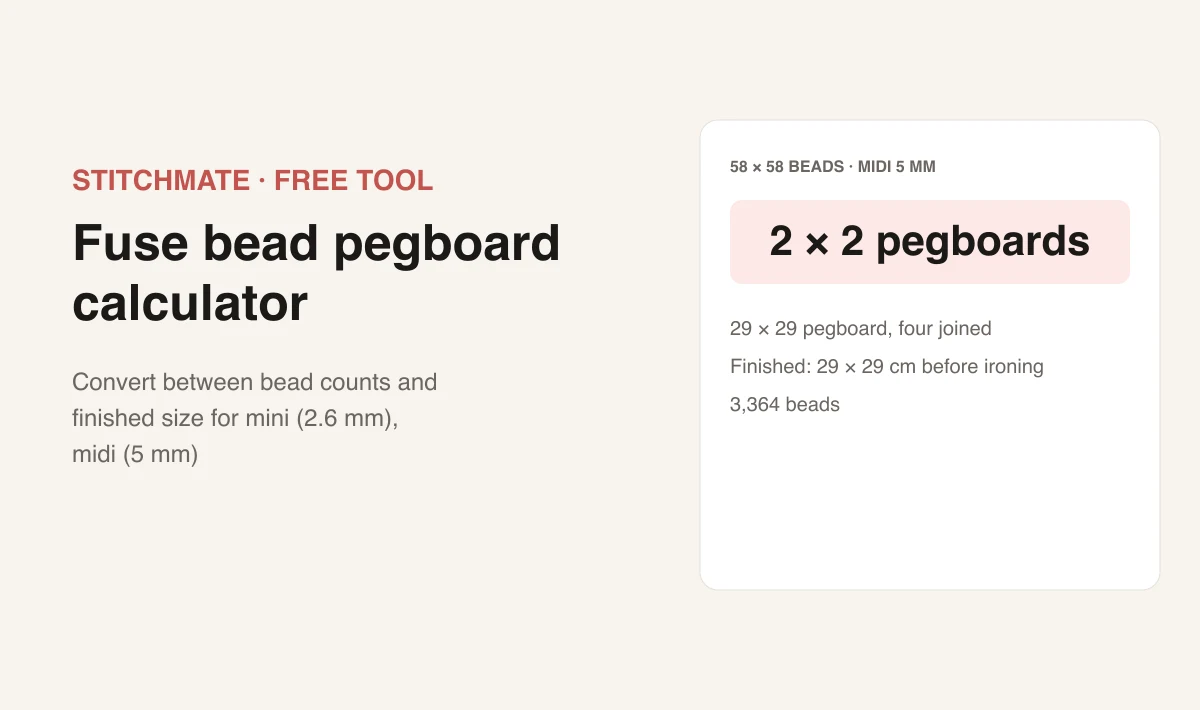
Spans 4 pegboards at 29×29 each. Interlock them and fuse section by section, or fuse the sections separately and join the seams on the second pass. Totals are whole-design numbers — the per-color counts live in the pattern's color key.
| Beads | Finished | Total | Boards |
|---|---|---|---|
| 29 × 29 | 14.5 × 14.5 cm | 841 | 1 |
| 40 × 40 | 20.0 × 20.0 cm | 1,600 | 4 |
| 58 × 58 (selected) | 29.0 × 29.0 cm | 3,364 | 4 |
| 64 × 64 | 32.0 × 32.0 cm | 4,096 | 9 |
| 87 × 87 | 43.5 × 43.5 cm | 7,569 | 9 |
| 100 × 100 | 50.0 × 50.0 cm | 10,000 | 16 |
| 116 × 116 | 58.0 × 58.0 cm | 13,456 | 16 |
| 145 × 145 | 72.5 × 72.5 cm | 21,025 | 25 |
Common project dimensions at midi (5 mm) on a 29×29 pegboard. 29×29 is one board; 58×58 is four boards interlocked.
The fuse bead pattern maker designs on a real bead grid and counts beads per color, or convert a photo at exactly the bead dimensions above. Free, in your browser.
计算器背后的算法:成品尺寸 = 豆数 × 豆子间距,因为每颗豆正好放在一根钉上。标准豆是 5 mm,每厘米两颗;迷你豆是 2.6 mm;巨型豆(也叫 Biggie)是 10 mm。拼豆板数量也是同样的除法,只不过是对板来算:每个方向上,图纸宽度 ÷ 板的宽度,再向上取整。
拼豆板的尺寸比新手想象的更重要。标准方形拼豆板是 29×29 钉,用标准豆约 14.5 cm,任何更大的作品都要在拼接起来的几块板上完成,并分块熨烫。这不是问题,所有大作品都是这样做的,但在开始一个宽 145 颗、要跨二十五块板的设计之前,最好心里有数。
不同的豆子尺寸和板的形状到底会给项目带来什么变化,详见拼豆尺寸和拼豆板指南(英文);熨烫这一步本身见如何熨烫拼豆(英文)。要按这些尺寸设计,拼豆图纸生成器在真实的拼豆网格上工作,并统计每种颜色的豆数;照片转拼豆图纸可以按你在这里算出的尺寸精确转换图片。
常见问题
29×29 的拼豆图纸有多大?
一块拼豆板能放多少颗豆?
大图纸需要几块拼豆板?
拼豆有哪些尺寸?
怎样把豆数换算成厘米?
应该多买多少备用豆?
看看你的照片转换出来是什么样
十字绣是一项实打实的投入:真的绣线、真的时间,图纸不合适时的失望也是真的。用 Stitchmate,你能提前清楚地看到要绣的是什么,在买第一束线之前就能确认。
上传图片,调整设置,查看 FLOW Score,大约 30 秒就知道行不行。免费制作图纸,无需账号。只有下载 PDF 时才需要付费。
免费上传你的照片