Fuse bead pegboard calculator
Convert between bead counts and finished size for mini (2.6 mm), midi (5 mm), and maxi (10 mm) beads — plus how many pegboards the design spans and how many beads to buy. Free, no signup.
Works with Perler, Hama, Artkal, and any other beads at the same pitch.
Pegboard Calculator
Patterns are sized in beads; a frame or a gift box is sized in centimeters. Enter whichever you have.
One pattern square = one bead = one peg. Pixel art imports at its exact pixel dimensions.
Midi (5 mm) is the default size everywhere — the cheapest beads and the widest color range. Maxi is also sold as Biggie.
The standard square pegboard is 29×29 pegs — about 14.5 cm of midi beads. Boards interlock, so a bigger design just spans several of them. Set your own number if your board differs.
Beads roll off the board, and a misfused section is worth redoing rather than living with.
One bead, one peg
Finished size = beads × bead pitch, because every bead sits on exactly one peg. Midi beads are 5 mm, so two beads per centimeter and 29 of them across a standard board. What bead size and board shape actually change about a project is covered in the bead sizes and pegboards guide, and the fusing itself in how to iron fuse beads.
Results
Spans 4 pegboards at 29×29 each. Interlock them and fuse section by section, or fuse the sections separately and join the seams on the second pass. Totals are whole-design numbers — the per-color counts live in the pattern's color key.
| Beads | Finished | Total | Boards |
|---|---|---|---|
| 29 × 29 | 14.5 × 14.5 cm | 841 | 1 |
| 40 × 40 | 20.0 × 20.0 cm | 1,600 | 4 |
| 58 × 58 (selected) | 29.0 × 29.0 cm | 3,364 | 4 |
| 64 × 64 | 32.0 × 32.0 cm | 4,096 | 9 |
| 87 × 87 | 43.5 × 43.5 cm | 7,569 | 9 |
| 100 × 100 | 50.0 × 50.0 cm | 10,000 | 16 |
| 116 × 116 | 58.0 × 58.0 cm | 13,456 | 16 |
| 145 × 145 | 72.5 × 72.5 cm | 21,025 | 25 |
Common project dimensions at midi (5 mm) on a 29×29 pegboard. 29×29 is one board; 58×58 is four boards interlocked.
The fuse bead pattern maker designs on a real bead grid and counts beads per color, or convert a photo at exactly the bead dimensions above. Free, in your browser.
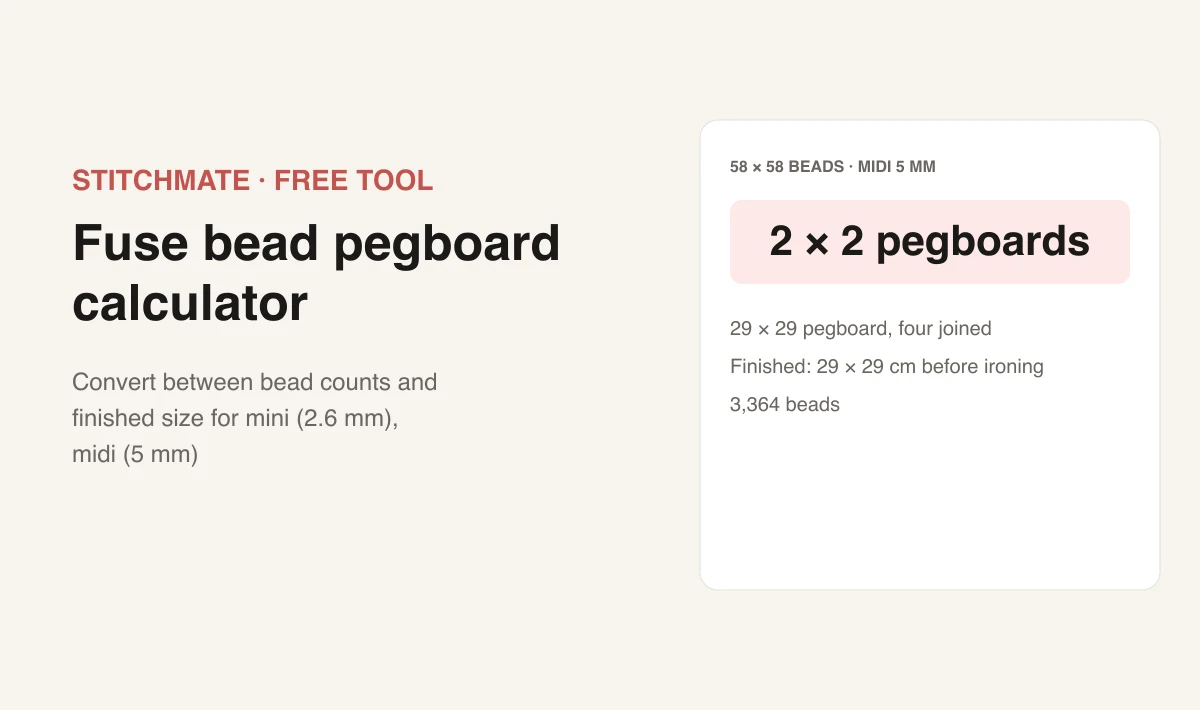
The math behind the calculator: finished size = bead count × bead pitch, because every bead sits on exactly one peg. Midi beads are 5 mm — two per centimeter — mini are 2.6 mm, and maxi (also sold as Biggie) are 10 mm. The pegboard count is the same division done on the board: pattern width ÷ board width, rounded up, in each direction.
Board size matters more than beginners expect. The standard square pegboard is 29×29 pegs, about 14.5 cm of midi beads, and anything bigger has to be built across interlocked boards and fused in sections. That is not a problem — it is how every large piece gets made — but it is worth knowing before you start a 145-bead-wide design that will span twenty-five boards.
What the sizes and board shapes actually change about a project is covered in the bead sizes and pegboards guide; the fusing step itself is in how to iron fuse beads. To design at these dimensions, the fuse bead pattern maker works on a real bead grid with per-color bead counts, and photo to fuse beads converts an image at exactly the size you calculated here.
FAQ
How big is a 29x29 fuse bead pattern?
How many beads fit on a pegboard?
How many pegboards do I need for a big pattern?
What size are fuse beads?
How do I convert a bead count into centimeters?
How many spare beads should I buy?
See how your photo converts
Cross stitch is a real commitment — real thread, real hours, real frustration if the pattern doesn't work. Stitchmate lets you see exactly what you're getting into before you buy the first skein.
Upload an image, adjust the settings, check the FLOW Score — about 30 seconds to know if it'll work. Everything up to PDF export is free, no account needed.
Upload Your Photo Free