Best Needlepoint Thread for Each Mesh Count
Thread thickness must match canvas mesh count. Here is what works on each canvas size — with specific brands, ply counts, and honest notes about the tradeoffs.
The thread you choose affects how your stitching looks, feels, and covers the canvas. The wrong thread on the wrong mesh count leaves gaps, bunches up, or makes stitching physically difficult. The right combination covers cleanly, pulls through smoothly, and produces the finish you want.
Here's what works on each canvas size — with specific brands, ply counts, and honest notes about the tradeoffs.
The rule that governs everything
Thread thickness must match canvas mesh count. Too thick and the thread won't pull through cleanly — it frays, bunches, and wears out before you finish. Too thin and the canvas shows through your stitches, creating a patchy, unfinished look.
This sounds obvious, but it's the single most common mistake new needlepointers make. A skein of beautiful hand-dyed silk is useless if it doesn't cover your 13-mesh canvas. A thick tapestry wool won't physically fit through 18-mesh holes.
The recommendations below are for tent stitch (continental or basketweave), which is the standard needlepoint stitch. Decorative stitches that cover multiple canvas threads may need thicker or thinner thread depending on the specific stitch.
Thread types at a glance
Before diving into mesh-specific recommendations, here's what each fiber type brings:
Wool — the traditional needlepoint fiber. Warm, matte finish, excellent canvas coverage, forgiving of uneven tension. Wool blooms slightly over time, filling in small gaps between stitches. Durable enough for functional pieces like pillows and chair seats.
Silk — luminous sheen, smooth stitching, gorgeous color depth. More expensive than wool and less forgiving of tension mistakes. The finished surface catches light beautifully. Best for decorative pieces you'll frame or display.
Cotton — smooth, matte, affordable. Widely available. Doesn't have wool's ability to bloom and fill gaps, so coverage needs to be precise. Good for beginners who want a less expensive entry point.
Blends (like Silk & Ivory, 50% silk / 50% wool) — combine silk's sheen with wool's coverage. Often the easiest to work with and the most versatile. Popular for good reason.
Novelty threads — metallics, velvet, fuzzy fibers. Used for accents, not full coverage. Add texture and sparkle to specific areas of a design.
10-mesh canvas
10-mesh has the largest holes and needs the thickest thread. Stitching goes fast, and coverage is easy to achieve — this is the most forgiving mesh count.
Appleton tapestry wool — the classic choice. One strand of tapestry weight covers 10-mesh perfectly. Rich colors, 400+ shades, soft hand. More common in British and European needlepoint traditions.
Persian wool (3 plies) — use all three plies for full coverage on 10-mesh. Persian wool is versatile because you can separate the plies for finer canvas. Colonial Persian and Patarnayan are the traditional brands, though they're becoming harder to find.
DMC tapestry wool — widely available, affordable, and comes in a large color range. Single strand covers 10-mesh well. A practical choice if you're near a craft shop that stocks it.
Silk & Ivory — works on 10-mesh with full strand. The silk-wool blend gives a subtle sheen that pure wool lacks. More expensive per skein but the coverage is excellent.
Budget option: Worsted weight knitting yarn covers 10-mesh canvas and costs a fraction of specialty needlepoint thread. The color range is more limited and the finish less refined, but for a first project or a piece where you're practicing stitches, it's a legitimate choice.
What doesn't work on 10-mesh:
- Stranded cotton (DMC floss) — far too thin, even with all 6 strands
- Perle cotton #8 — too thin for coverage
- Most silk threads — too fine, won't cover
- Single-ply Persian wool — gaps everywhere
13-mesh canvas
The most popular mesh count gets the widest range of thread options. This is where you have the most freedom to choose based on aesthetic preference rather than physical constraints.
Silk & Ivory — the community favorite for 13-mesh, and for good reason. The single-strand silk-wool blend covers cleanly, stitches smoothly, and the color range is extensive. The slight sheen from the silk component lifts the finished piece above pure wool without the full commitment (or cost) of pure silk.
DMC Soft Cotton (Retors Mat) — increasingly popular and significantly more affordable than silk blends. The matte finish suits modern, graphic designs. Size 3 covers 13-mesh canvas well.
Appleton crewel wool (2 strands) — crewel weight is thinner than tapestry weight, so you use two strands together on 13-mesh. The advantage: you can mix shades in the needle for custom color blending that single-strand threads can't achieve. Appleton's color range is exceptional — 421 colors across carefully graduated shade families.
Persian wool (2 plies) — separate a 3-ply strand and use 2 plies. Good coverage, traditional look.
Planet Earth merino or silk — premium single-strand options with beautiful hand and color depth.
Perle cotton #5 — a twisted, non-divisible cotton thread with a subtle luster. Good coverage on 13-mesh, widely available, and comes in the full DMC color range.
For texture and accents on 13-mesh:
- Very Velvet — soft, plush thread for backgrounds or specific texture areas
- Neon Rays / Neon Rays+ — flat, shiny synthetic for metallic or glossy effects
- Kreinik metallics — braids and ribbons for gold, silver, and sparkle accents
What doesn't work on 13-mesh:
- Tapestry weight wool (single strand) — too thick, distorts the canvas
- Worsted weight yarn — won't fit through the holes
- DMC stranded cotton at 2 strands — too thin, poor coverage
- Perle cotton #8 — too thin for reliable coverage
18-mesh canvas
Fine mesh demands fine thread. The holes are small, the stitches are tiny, and thread selection becomes critical — too thick and stitching is physically difficult; too thin and the canvas grins through.
Vineyard Silk — the go-to for 18-mesh in the needlepoint community. A smooth, single-strand silk with exceptional color saturation and a luminous finish. Stitches like butter on fine canvas. If you're investing time in an 18-mesh piece, Vineyard Silk is worth the cost.
DMC stranded cotton (2 strands) — the affordable workhorse. Separate a 6-strand skein and use 2 strands for tent stitch on 18-mesh. The color range (489 colors) is the largest of any thread brand, and the thread is available everywhere. Coverage is adequate but not plush — you may see traces of canvas on lighter colors.
Perle cotton #8 — a single, non-divisible strand that covers 18-mesh cleanly. Less sheen than silk but more structure than stranded cotton. Good for designs with a crisp, graphic quality.
Appleton crewel wool (1 strand) — a single strand of crewel weight covers 18-mesh with a soft, matte finish. Wool's natural bloom helps fill tiny gaps between stitches over time.
Persian wool (1 ply) — separate a 3-ply strand and use a single ply. Traditional choice for fine needlepoint work.
Silk & Ivory (stripped) — you can separate the plies to create a finer thread that works on 18-mesh. More labor-intensive to prepare but gives you the silk-wool blend on fine canvas.
For texture and accents on 18-mesh:
- Very Velvet Petite — the fine version, sized for 18-mesh
- Silk Lamé Braid — fine metallic for delicate sparkle
- Wisper — fine fuzzy thread for animal fur and soft textures (2 strands on 18-mesh)
- Kreinik #4 Very Fine Braid — metallics that fit 18-mesh without overwhelming the design
What doesn't work on 18-mesh:
- Any tapestry weight wool — physically too thick to pull through
- Silk & Ivory at full strand — too thick, distorts canvas
- Perle cotton #5 — too thick
- 3-ply Persian wool — far too thick
Quick reference: thread coverage chart
| Thread | 10-mesh | 13-mesh | 18-mesh |
|---|---|---|---|
| Appleton tapestry wool | ✓ (1 strand) | Too thick | Too thick |
| Appleton crewel wool | — | ✓ (2 strands) | ✓ (1 strand) |
| Persian wool | ✓ (3 ply) | ✓ (2 ply) | ✓ (1 ply) |
| DMC tapestry wool | ✓ (1 strand) | Too thick | Too thick |
| DMC Soft Cotton | — | ✓ (Size 3) | Borderline |
| DMC stranded cotton | Too thin | Too thin | ✓ (2 strands) |
| Silk & Ivory | ✓ (full) | ✓ (full) | Strip to 1 ply |
| Vineyard Silk | Too thin | Borderline | ✓ (1 strand) |
| Perle cotton #5 | — | ✓ | Too thick |
| Perle cotton #8 | Too thin | Too thin | ✓ |
| Planet Earth merino | — | ✓ | ✓ |
"Borderline" means it technically fits but coverage may be inconsistent. When in doubt, stitch a small test area before committing.
How to test coverage
Before stitching your actual project, work a 1-inch square (roughly 13 x 13 stitches on 13-mesh) in your chosen thread and canvas. Check:
Does the canvas disappear? Look at the front of your test swatch from about two feet away. If you can see canvas threads between stitches, your thread is too thin — add a ply, switch to a thicker thread, or increase your stitch tension slightly.
Does the thread pull through easily? If you're fighting to get the needle through each hole, the thread is too thick. Forcing it damages both the thread (it frays and thins) and the canvas (it stretches the holes). Switch to a thinner option.
Does the thread wear out? Cut your working length to about 18 inches. If the thread is noticeably thinner or fuzzier by the time you finish a length, it's wearing against the canvas holes. This happens more with wool than silk. Shorter working lengths help, but if it's severe, the thread may be wrong for your mesh count.
Is the texture what you want? Coverage isn't the only consideration. Two threads that both cover 13-mesh can produce very different finished surfaces — wool vs silk, matte vs shiny, rustic vs refined. Your test swatch tells you what you'll be living with for the entire project.
Buying thread: practical advice
How much to buy
Needlepoint uses more thread than cross stitch because every inch of canvas gets covered. A rough guide for tent stitch:
| Mesh count | Thread per square inch |
|---|---|
| 10 | ~1.0 meters |
| 13 | ~1.3 meters |
| 18 | ~1.8 meters |
These are estimates that include normal waste. The wool calculator turns a stitch count into Appleton skeins and hanks (or DMC cotton) with the strand math handled. Background colors (which often cover the largest area) are where you're most likely to run short. Buy 20% more than you calculate for background colors — running out mid-project and hitting a dye lot difference is the kind of problem you can see from across the room.
Dye lots matter
Wool and hand-dyed threads vary between production runs. If you're buying multiple skeins of the same color (especially for backgrounds), buy them all at once from the same dye lot. Ask your needlepoint shop to check — they're used to this request.
Machine-dyed threads like DMC stranded cotton are more consistent, but even they can show slight variation between lots on large areas.
Where to buy
Local needlepoint shops (LNS) are ideal — they can help you match thread to canvas, check coverage, and advise on quantities. They also let you see colors in person, which matters more than you'd think. Screens lie about color.
Online: Needlepoint.com, KC Needlepoint, Nashville Needleworks, and The Needlepointer carry most major thread lines. Willow Fabrics is a good source for Appleton and Anchor in the UK.
FAQ
Can I mix thread types in one project?
Can I use DMC floss for needlepoint?
What about hand-dyed threads?
Does thread brand affect difficulty?
How many colors do I need?
Design Your Needlepoint Pattern
Convert any image into a needlepoint chart with the right stitch count for your canvas — then export a printable PDF with thread lists.
Try Stitchmate FreeNo account required. Works in your browser.
Related Guides & Tools
What Is Needlepoint Mesh Count?
Every common canvas size compared — with project recommendations and finished size calculations.
Needlepoint vs Cross Stitch
Materials, techniques, cost, and difficulty compared side by side.
Cross Stitch Thread Types
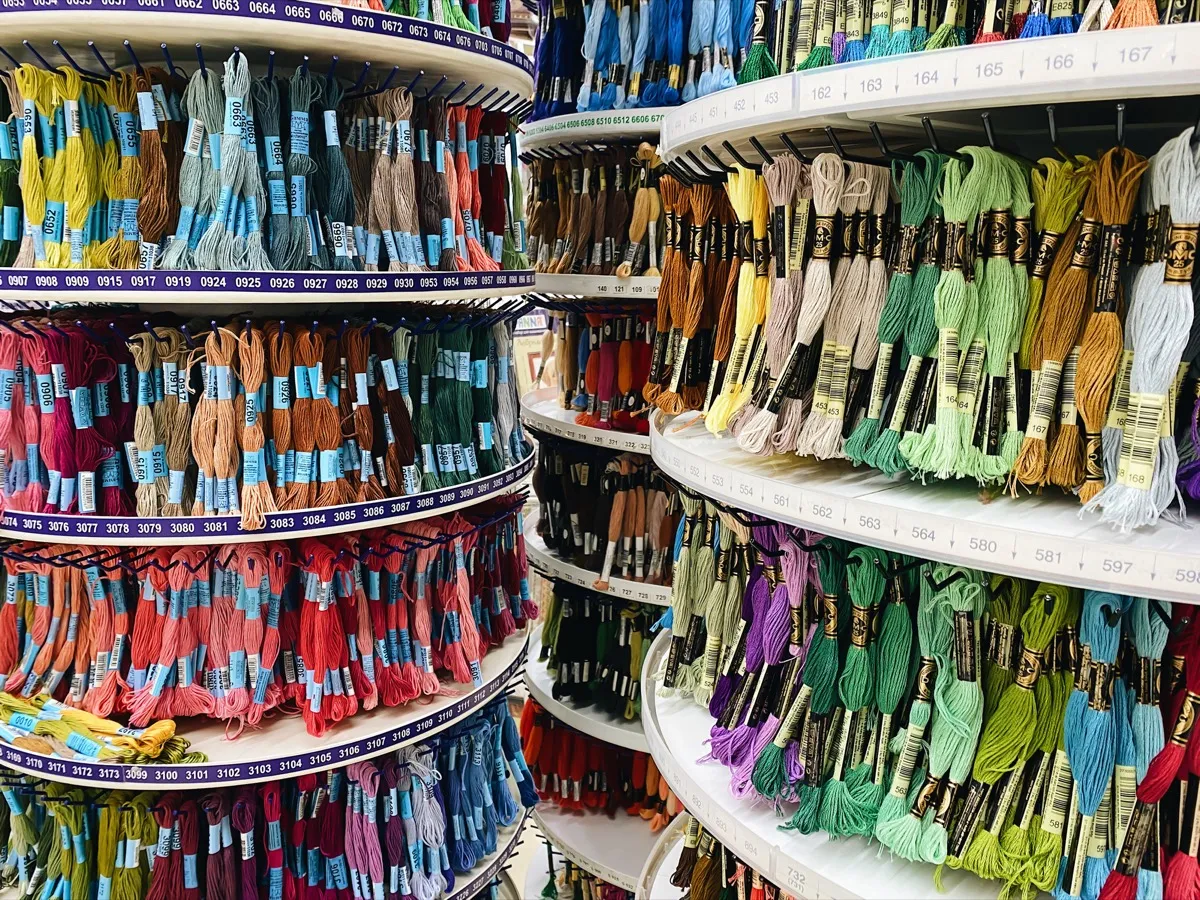
Stranded cotton, hand-dyed, metallic, silk — the thread landscape on the cross stitch side.

DMC Color Chart
Browse all 489 DMC colors — useful for 18-mesh needlepoint where DMC stranded cotton works.

Fabric Calculator
Enter stitch count and mesh count to see finished size and canvas dimensions.
DMC vs Anchor Thread
How the two major stranded cotton brands compare — relevant for 18-mesh needlepoint.
What Is Tent Stitch?
The stitch all of these thread pairings assume — and why basketweave uses more thread than continental.
How to Needlepoint
The beginner guide these thread pairings plug into — supplies, kits, and a first project.